Growth
The WhatsApp Trap: Why Sharing Properties One-by-One Doesn't Scale
Jun 26, 2026 • 6 min read
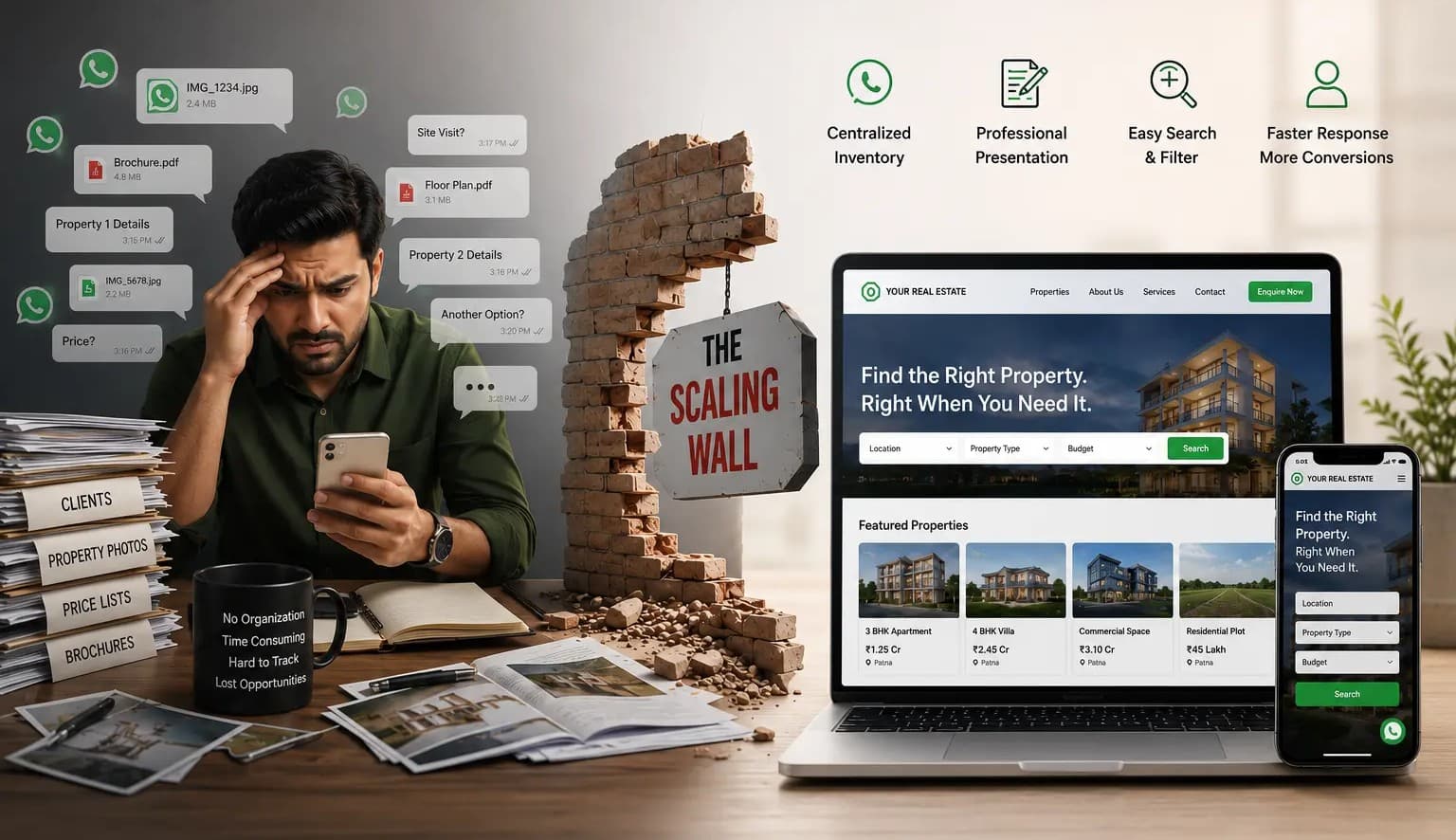
It's 10:30 AM, and You're Already Behind
Your day starts with a few WhatsApp messages from potential buyers.
One person is looking for a 3BHK apartment under ₹80 lakhs. Another wants a commercial property near the highway. A previous client has asked if the villa you showed them last week is still available, while someone else is requesting the latest price sheet for a residential project.
You unlock your phone, scroll through old chats, search your gallery for property photos, locate a brochure PDF, copy a Google Maps link, and finally send everything across.
Before you've finished responding, three more inquiries have arrived.
If this routine sounds familiar, you're not alone. Thousands of property dealers across India rely almost entirely on WhatsApp to manage customer conversations. It's fast, convenient, and everyone already uses it.
The problem is that WhatsApp was designed for communication—not for managing a growing real estate business.
Why WhatsApp Works... Until It Doesn't
When you're handling five or ten properties, sharing information manually doesn't feel like much work. Every listing is easy to remember, the photos are still easy to find, and customers usually receive a response within a few minutes.
As your business grows, however, the same workflow begins to slow you down.
Instead of helping you sell properties, WhatsApp becomes the place where valuable time disappears. You're constantly searching through chats, forwarding the same brochures, answering identical questions, and trying to remember which customer was interested in which property.
Growth brings more opportunities—but it also brings more complexity.
The Real Cost of Managing Hundreds of Properties Through Chat
The biggest challenge isn't sending messages. It's managing information.
Every new property adds another folder of photos, another brochure, another floor plan, another price sheet, and another location link. After a few months, your phone becomes a library of files with no real organization.
Now imagine a buyer asking about a property you listed six months ago.
You know you have the brochure somewhere. You know the photos are saved on your phone. You remember sharing them with another client last month.
Finding them, though, takes several minutes.
From the customer's perspective, those minutes feel much longer. While you're searching, they're probably contacting two or three other property dealers as well.
Every Manual Reply Takes Time You Could Spend Selling
Property dealers often underestimate how much time repetitive work consumes.
For every inquiry, you might need to:
- Search property images
- Find the latest brochure
- Share pricing details
- Send the location
- Explain amenities
- Answer common questions
Individually, these tasks seem small.
Repeated fifty times a day, they become hours of administrative work instead of sales conversations.
Rather than helping new buyers, you're constantly repeating the same process for every inquiry.
Customers Expect Instant Information
Today's property buyers behave differently than they did a few years ago.
Before contacting an agent, they've already searched Google, watched YouTube videos, compared prices, and browsed dozens of listings online.
When they finally send you a message, they expect quick and complete information.
If they have to wait while you search for photos or compile documents, many simply move on to another dealer who responds faster.
In real estate, speed often creates trust.
A fast response signals professionalism. A delayed response can make buyers wonder whether the property is still available at all.
As Your Inventory Grows, Things Start Falling Through the Cracks
Most successful property dealers don't struggle because they lack customers.
They struggle because they have too many conversations happening at once.
One customer wants a site visit tomorrow.
Another is waiting for revised pricing.
A third has asked for a video walkthrough.
Someone who contacted you two weeks ago still hasn't received a follow-up call.
None of these leads are intentionally ignored. They're simply buried beneath hundreds of WhatsApp messages.
Eventually, promising opportunities disappear—not because the customer wasn't interested, but because the conversation was lost in a busy inbox.
Buyers Want to Explore Properties, Not Wait for Them
Imagine you're shopping online for a new phone.
Would you rather browse hundreds of products yourself, compare features, and filter by price?
Or would you prefer sending a message to a salesperson every time you wanted to see another option?
Real estate works the same way.
Modern buyers expect to search properties by budget, location, property type, amenities, or possession status without waiting for someone to manually send every listing.
Giving buyers that freedom doesn't replace your role as an agent—it simply makes the buying process more convenient.
A Website Doesn't Replace WhatsApp—It Complements It
Many property dealers assume that building a website means customers will stop contacting them through WhatsApp.
In reality, the opposite happens.
Instead of using WhatsApp to discover properties, buyers use it to discuss the properties they've already found.
A typical customer journey becomes much smoother:
- The buyer discovers your business on Google.
- They browse available properties on your website.
- They compare options, view photos, and check details.
- They shortlist the properties they like.
- They click “Chat on WhatsApp” to ask specific questions or schedule a visit.
Now, instead of sending dozens of files, you're having meaningful conversations with buyers who already know what they're interested in.
A Professional Website Solves Problems WhatsApp Never Could
A real estate website isn't just an online brochure.
It becomes the central hub of your business.
Every property lives in one organized system, complete with photos, videos, pricing, amenities, floor plans, and location details. Buyers can search and filter listings themselves, while you spend less time repeating the same information.
Instead of manually forwarding brochures all day, you can focus on negotiations, site visits, and closing deals.
Even better, your listings can appear in Google Search, allowing potential buyers to discover your business without needing someone to forward your number first.
That's something WhatsApp simply cannot do.
The Best Real Estate Businesses Use Both
The most successful property dealers don't choose between WhatsApp and a website.
They use each tool for what it does best.
Their website attracts visitors, showcases available properties, builds trust, and captures inquiries.
WhatsApp then becomes the platform for personal conversations, negotiations, and follow-ups.
Together, they create a smoother experience for both the buyer and the business.
Final Thoughts
WhatsApp is one of the most useful communication tools available today, and it will continue to play an important role in the real estate industry.
But communication alone isn't enough when your business starts growing.
If you're managing dozens or hundreds of property listings, relying entirely on chat messages eventually leads to slower responses, disorganized information, and missed opportunities.
A professional real estate website doesn't replace WhatsApp—it removes the repetitive work that prevents you from focusing on what matters most: helping buyers find the right property and closing more deals.
As your inventory grows, your systems need to grow with it. The sooner that happens, the easier it becomes to scale your business without scaling your daily workload.
Frequently Asked Questions
Is WhatsApp enough for managing a real estate business?
WhatsApp is excellent for communicating with clients, but it isn't designed to organize large property inventories, track inquiries, or help buyers search listings efficiently.
Can a real estate website integrate with WhatsApp?
Yes. Most modern real estate websites include click-to-chat buttons, inquiry forms, and instant WhatsApp integration so buyers can contact agents directly from any property page.
Will a website help generate more property leads?
A website improves your visibility on Google, showcases your listings 24/7, and allows interested buyers to discover your business even before contacting you.
When should a property dealer invest in a website?
If you're handling more than a few dozen listings, receiving regular inquiries, or spending significant time manually sending property details, a website can save time, improve customer experience, and support long-term business growth.
Ready to move beyond one-by-one WhatsApp sharing? Veda Foundry builds real estate platforms with live listings, lead capture, and WhatsApp integration — so you can scale without losing the personal touch.
Start a conversation on WhatsApp