Product
From Google Maps Listing to Digital Website: What Property Dealers Are Missing
Jul 26, 2026 • 8 min read
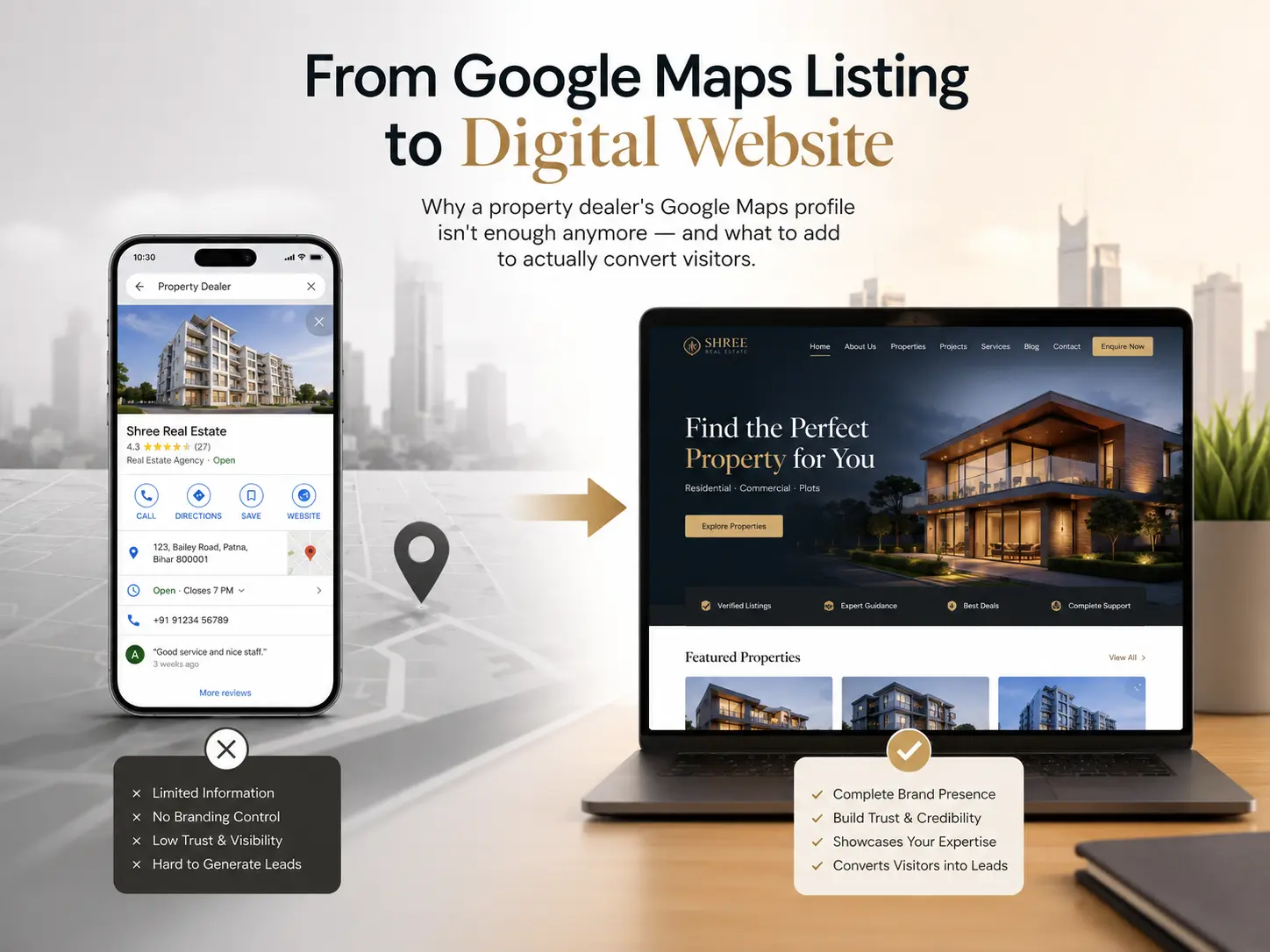
If someone searches “real estate agent near me” or “flats for sale in Patna,” your Google Maps listing is probably how they find you. It's free, it's fast to set up, and for local discovery, nothing beats it.
But here's the problem: getting found isn't the same as getting chosen.
A Google Maps pin can show your name, a star rating, and a phone number. It can't show a buyer what your current listings look like, what your process feels like, or why they should trust you over the five other pins sitting right next to yours on the same map. That's where most real estate businesses lose the deal — not before the search, but right after it.
Why a Maps Listing Alone Isn't Enough Anymore
1. You look identical to every competitor next to you
Open Google Maps and search for property dealers in any city. You'll see a cluster of pins — same star ratings, same generic categories, same “Call Now” button. There's nothing in that listing that tells a buyer what makes you different. A dedicated website is the only place you actually get to make a first impression on your own terms.
2. There's no way to actually browse your inventory
A Maps listing can link to a website, but if that link goes nowhere (or nowhere useful), you've sent a warm lead into a dead end. Serious buyers want to scroll through active listings, filter by budget, locality, and property type, and see photos — before they ever pick up the phone. Without that, you're relying entirely on people calling a stranger cold, which most buyers today are reluctant to do.
3. You have zero trust signals beyond a star rating
Reviews on Maps help, but they're thin — a line or two, easy to fake, and impossible to expand on. A website lets you show RERA registration details, past project deliveries, client testimonials with context, and your actual track record. In real estate, where a single transaction can be someone's life savings, trust signals aren't optional — they're the deciding factor.
4. You're invisible to organic search traffic
A Maps listing only shows up in local map-pack results and only when someone is already searching nearby. It does nothing for buyers searching things like “3 BHK flats under 80 lakh in Kankarbagh” or “best localities to invest in Patna real estate.” A proper website with SEO-optimized property pages can rank for exactly these searches — pulling in buyers who don't even know your business name yet.
5. There's no way to capture a lead who isn't ready to call
Not every visitor wants to talk to you immediately — some just want to browse first. Without a website, your only conversion point is a phone call, which is a high-commitment first step for a stranger. A website lets you capture interest earlier through inquiry forms, WhatsApp chat buttons, and property-specific “Contact for details” actions — meeting the buyer at whatever stage they're actually at.
6. You can't showcase locality or pricing insight
Buyers researching real estate almost always compare localities before they compare properties. A website can show price trends by area, nearby developments, and locality guides — positioning you as the local expert, not just another listing agent. That kind of content is impossible to convey through a Maps profile.
What to Add: A Simple Checklist
If you're a property dealer relying mainly on your Google Maps listing right now, here's what actually moves the needle:
- ▸A live, browsable property catalog — searchable by budget, locality, and type, not a static PDF you email on request
- ▸RERA verification displayed clearly on every listing, building buyer confidence upfront
- ▸WhatsApp and call-to-action buttons on every property page, not just your homepage
- ▸Locality pages with pricing trends and nearby infrastructure — this is also what ranks well in search
- ▸Client testimonials with real context — not just star ratings, but a sentence on what the experience was actually like
- ▸A mobile-first design — most property searches in India start on a phone, often triggered by exactly the Maps listing that brought them there
- ▸Fast page load and clean navigation — buyers browsing 10+ properties in one session will drop off fast on a slow, cluttered site
Google Maps and a Website Aren't Competing — They Work Together
The goal isn't to abandon your Maps presence — it's to stop treating it as your entire digital footprint. Maps gets you discovered locally. A proper website is what turns that discovery into an actual inquiry, and that inquiry into a closed deal.
Property dealers who pair a strong Maps profile with a real, searchable website consistently see more qualified leads — because by the time a buyer calls, they've already browsed your listings, seen your credentials, and decided you're worth talking to. That's a very different conversation than a cold call off a Maps pin.
Looking to turn your real estate business's Google Maps traffic into an actual website that converts? Veda Foundry builds property platforms with live listings, RERA verification, and lead capture built in from day one.
Start a conversation on WhatsApp